

Fashion Merchandising: Strategy, Buying & Commercial Performance
Designed & created by fashion industry professionals with real-world merchandising and eCommerce experience.


Learn how to plan, buy and optimise fashion collections that sells across retail and eCommerce.
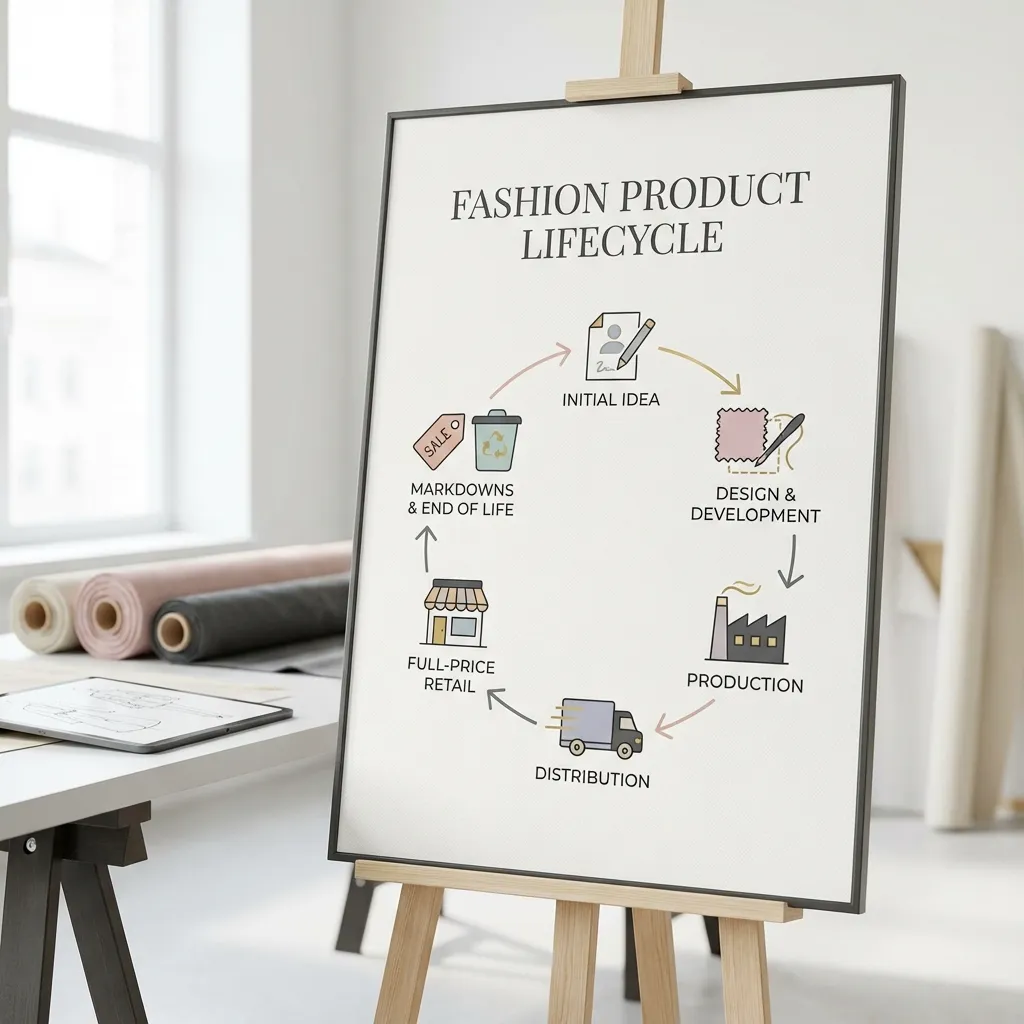
Online course (2 hours) This Fashion Merchandising masterclass takes you inside the full lifecycle of a fashion collection, from the first creative brief to in-store and eCommerce performance, all the way to the end of the product’s commercial life.
You’ll learn how merchandising connects design, production, marketing, finance and commercial teams, and how to plan collections that are not only creative, but sellable and profitable. The course guides you through collection development, competitor and range analysis, goal setting and KPIs, and the execution of sales campaigns through showrooms and merchandising pushes.
You’ll also explore what happens after the sale: production follow-up, product launch in stores and online, performance analysis and insights to improve future collections. Along the way, you’ll gain exposure to industry tools such as WGSN, Edited and Retviews, and learn best practices used by leading fashion brands.
Led by Mirko Buccianti, Collection Merchandising Manager with experience at Gucci, Brunello Cucinelli and Thom Browne, this masterclass delivers practical, real-world insights to help you build collections that perform.
Course availability
⇢ Enrol now and start immediately
COURSE DURATION
⇢ 2 Hours + about 30 minutes for practice
Delivery format
Online virtual classroom, with final exercise, merchandising templates.
COURSE DURATION
Language: English – Subtitles: English and other languages including Spanish, German, French available upon request (free of charge).
Course Price
€ 85
Certification
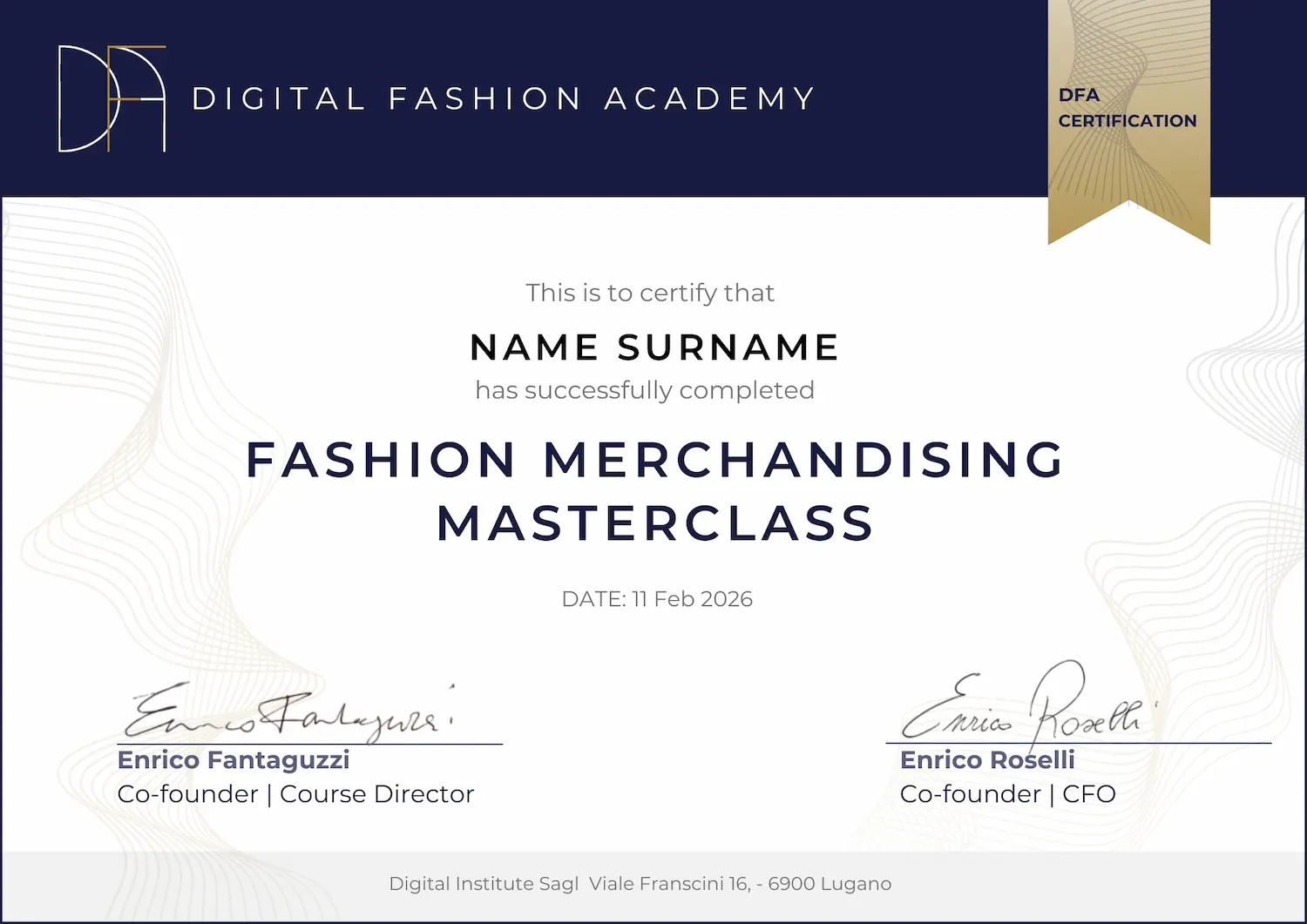
Certificate of attendance
COMMITMENT
2 hours masterclass + 1 hour practice

Why take this course
Fashion merchandising sits at the intersection of creativity and business. Whether you work in retail, wholesale or eCommerce, strong merchandising skills are essential to drive profitability, reduce markdowns and build commercially successful collections.
- Understand the role of merchandising in fashion business performance
- Learn how to plan and structure collections by category, price point and season
- Use data and KPIs to optimise stock, sell-through and margins
- Bridge the gap between product, marketing and eCommerce teams
Course Programme

Module 1 – Merchandising. The Role of the Fashion Merchandiser
Introducing Fashion Merchandising
Understanding how Fashion Merchandisers connect creative vision with commercial objectives throughout the product lifecycle
- The purpose and responsibilities of Fashion Merchandising
- Balancing creativity, market demand and financial performance
- Collaboration with design, product development, finance, buying and marketing teams
- Product hierarchy: style, material, colour, size and SKU
- Fashion collection structure and seasonal terminology
- Pre-collections, main collections, carryovers, deliveries and drops
- Introduction to sell-in, sell-through and sell-out
- The collection calendar and retroplanning process
Module 2 – Merchandising. Collection Analysis and Commercial KPIs
Using Data to Evaluate Collection Performance
Learning how to identify product opportunities, commercial risks and priorities through structured performance analysis
- Analysing sell-in and sell-out performance
- Using the analytical funnel: from market and channel to individual SKU
- Measuring sales performance in value and units
- Understanding product and category contribution to total business
- Evaluating year-on-year performance variations
- Margin and profitability analysis
- Average selling price and Units per Transaction
- Sell-through and discount-rate monitoring
- Using Excel, Power BI, Tableau and Qlik for merchandising analysis
Module 3 – Merchandising. The Collection Brief and Range Planning
Translating Business Objectives into a Collection Plan
Creating a structured collection brief that combines financial targets, market insights, product needs and creative direction
- The purpose and structure of the collection brief
- Defining financial and collection-size targets
- Identifying product needs and key design directions
- Creating the price architecture
- Establishing the range plan
- Measuring collection efficiency
- Understanding the 70% development-to-production efficiency target
- Managing the commercial and operational risks of over-development
- Translating analytical findings into clear product requests
Module 4 – Merchandising. Collection Architecture, Trends and Competitor Analysis
Building a Balanced and Competitive Collection
Using collection structure, price positioning, trend research and benchmarking to identify market opportunities
- Creating the collection pyramid
- Balancing image products, seasonal products and carryovers
- Mapping price ranges and product functions
- Identifying product and price gaps within the collection
- Researching trends through social media, VIPs and fashion shows
- Using trend-forecasting platforms such as WGSN and Heuritech
- Collecting insights from local teams and international markets
- Benchmarking competitors by product, material and price point
- Using Retviews, LiveTrend and EDITED for market intelligence
Module 5 – Merchandising. Collection Development and Sample Management
From Product Concept to Final Sample Set
Applying the merchandising strategy during product development while maintaining creative, financial and commercial alignment
- Coordinating design sketches and prototype development
- Reviewing products for design, cost and strategic alignment
- Maintaining numerical and commercial objectives during development
- Managing product changes and development reviews
- Freezing the collection for the selling campaign
- Defining the sample set
- Selecting which SKUs should be physically sampled
- Using samples for sales, marketing, photoshoots and celebrity placements
- Communicating differences between samples and final production
Module 6 – Merchandising. The Selling Campaign
Preparing and Presenting the Collection
Organising the physical and digital selling environments required to communicate the collection and support buying decisions
- Reviewing sample quality, costs and margins
- Finalising prices, deliveries and product drops
- Managing last-minute product changes
- Setting up the physical showroom
- Creating looks and product combinations that support buying decisions
- Preparing the virtual showroom
- Using platforms such as JOOR, NuORDER and Hyphen
- Creating the master order and merchandising push
- Selecting products for marketing and communication activities
- Presenting the collection concept, novelties, materials and craftsmanship
- Understanding the merchandising implications of fashion-show collections
Module 7 – Merchandising. Product Launch and In-Season Performance
Managing the Collection Across Stores and eCommerce
Coordinating the product launch and using in-season performance data to improve sales and product availability
- Monitoring sell-in results and production status
- Tracking production delays and launch timing
- Preparing product training and updated content
- Coordinating store and eCommerce launches
- Ensuring consistent product visibility and information across channels
- Monitoring sell-through and customer-demand signals
- Combining quantitative data with qualitative market feedback
- Identifying bestsellers and underperforming products
- Recognising seasonal products with future carryover potential
- Supporting replenishment, redistribution and corrective actions
Module 8 – Merchandising. Markdown and End-of-Lifecycle Management
Managing the Final Stage of the Product Lifecycle
Clearing remaining inventory while protecting margins, profitability and brand positioning
- Evaluating stock levels and residual customer demand
- Defining markdown strategies according to product performance
- Balancing inventory clearance with brand positioning
- Managing discounts and promotional activity
- Redistributing remaining products across markets and channels
- Using outlets and stockists as alternative sales channels
- Analysing final collection performance
- Identifying lessons and insights for the next collection brief
Module 9 – Merchandising. AI Applications for Fashion Merchandising
Using AI to Improve Merchandising Efficiency
Exploring how artificial intelligence can accelerate analysis, automate recurring activities and improve market responsiveness
- Using AI to summarise complex data files
- Extracting insights from sales and product-performance information
- Supporting trend and market research
- Discovering emerging brands and competitors
- Automating product descriptions and copy corrections
- Increasing the efficiency of recurring merchandising activities
- Using AI as a decision-support tool rather than a replacement for human judgement
- Protecting sensitive and confidential company information
Glossary of Terms in this Course
Here is a glossary of the essential Fashion Merchandising terms and acronyms covered in the masterclass:
Key Metrics & Financials
- Collection Efficiency: The percentage of developed prototypes (SKUs) that are actually produced. The target is typically 70%; falling below implies waste, while nearing 100% suggests a lack of creative risk.
- Landed Cost: The total cost of a product delivered to the warehouse, including production, transportation, and duties.
- Marginality: The difference between the production cost and the retail price (excluding VAT). It is the primary profitability driver that covers all operational costs (rent, staff, marketing).
- MOQ (Minimum Order Quantity): The lowest quantity of a product or material (like fabric) that a supplier requires to accept an order.
- Sell-in: Sales made to retailers or third-party distributors (B2B sales).
- Sell-out: Sales made to the final consumer (B2C sales).
- Sell-through: The percentage of inventory sold to customers compared to the amount delivered to the store. This is the primary trigger for reorders or markdowns.
Product & Collection Structure
- Carryover: Core “bread and butter” items that are repeated every season (e.g., a classic white sneaker). They provide financial stability.
- Collection Brief: The strategic document outlining the financial targets, product needs, and price architecture for the design team before development begins.
- Master Order: A theoretical “ideal order” created by merchandising to guide sales teams on what a perfect store assortment should look like.
- Sample Set: The physical prototypes used to present and sell the collection to buyers. Not every developed SKU becomes a sample due to cost.
- SKU (Stock Keeping Unit): A specific product identification code that defines a unique combination of Style + Material + Color + Size.
Industry Terms
- Full Canvas vs. Fused: Jacket construction terms used in benchmarking. Fused uses glue (cheaper/stiffer), while Full Canvas uses a stitched internal layer (more expensive/better drape).
- Virtual Showroom: A digital platform (e.g., Joor, NuOrder) used to sell collections remotely, allowing retailers to view product data and place orders without visiting physically.
Learning Outcomes
- Understand how merchandising decisions impact sales and profitability
- Plan and structure fashion collections strategically
- Analyse performance using merchandising KPIs
- Optimise stock across retail and eCommerce channels
- Apply merchandising logic to real fashion business scenarios
Certification
Certificate of Attendance
On successful completion, you’ll receive a certificate recognising your practical skills in fashion merchandising. Ideal to share on LinkedIn and include in your CV.
Who is this course for?
- Fashion merchandising and buying professionals
- Junior merchandisers looking to strengthen their commercial skills
- Fashion founders managing their own collections
- eCommerce and retail managers working with fashion products
- Students and career switchers entering the fashion industry
Meet your instructors
Fashion Merchandising instructor: Mirko Buccianti

Collection merchandising manager with experience in Gucci, Brunello Cucinelli, Furla, Bally, Thom Browne.
- Merchandising Manager with extensive experience in the fashion and luxury industry, working at the intersection of creativity, data and strategy to shape strong, relevant and commercially successful collections.
- With a solid background across men’s and women’s collections, I translate brand vision, market insights and performance data into clear product strategies, effective range plans and coherent assortments.
- My work bridges creative and commercial teams, helping brands turn intuition into structure and product decisions into long-term value.
FAQs
Can I start anytime?
The course is available on-demand, enrol now and start immediately.
How long does it take to complete?
Estimated time: 2.5 hours, including the practice. You can revisit lessons and templates anytime.
Do I need prior experience to attend?
No. There is no mandatory experience required to attend.
What resources are included?
Video lessons, slides, case studies and templates for exercise.
In which languages are the lessons available?
Lessons are in English with English subtitles. You can request subtitles in any language.
How long do I have access to the course after I enrol?
You will have access to the on-line course video for 2 months. Any workbooks, templates and a copy of the presentation will be yours forever.
Is there a certification at the end of the course?
Yes. Upon completion of the course and exercises, you will receive a Certificate of Attendance by Digital Fashion Academy that you can include in your CV and social profiles.
How can I enrol on this course?
To enrol on this course, click the button Enrol and complete the checkout. You can pay by credit card, PayPal or bank transfer. Credit cards and PayPal offer also the option to pay by instalments. After completing the checkout you’ll receive the username and password to access out e-learning platform and begin the course.
I need an invoice form my company, can I have it?
Yes, you can receive an invoice and pay by bank transfer if you prefer, please contact us from the form below.