
Shopify for Fashion: how to customize your product data and product page
What are shopify metafields and why they are important for fashion?
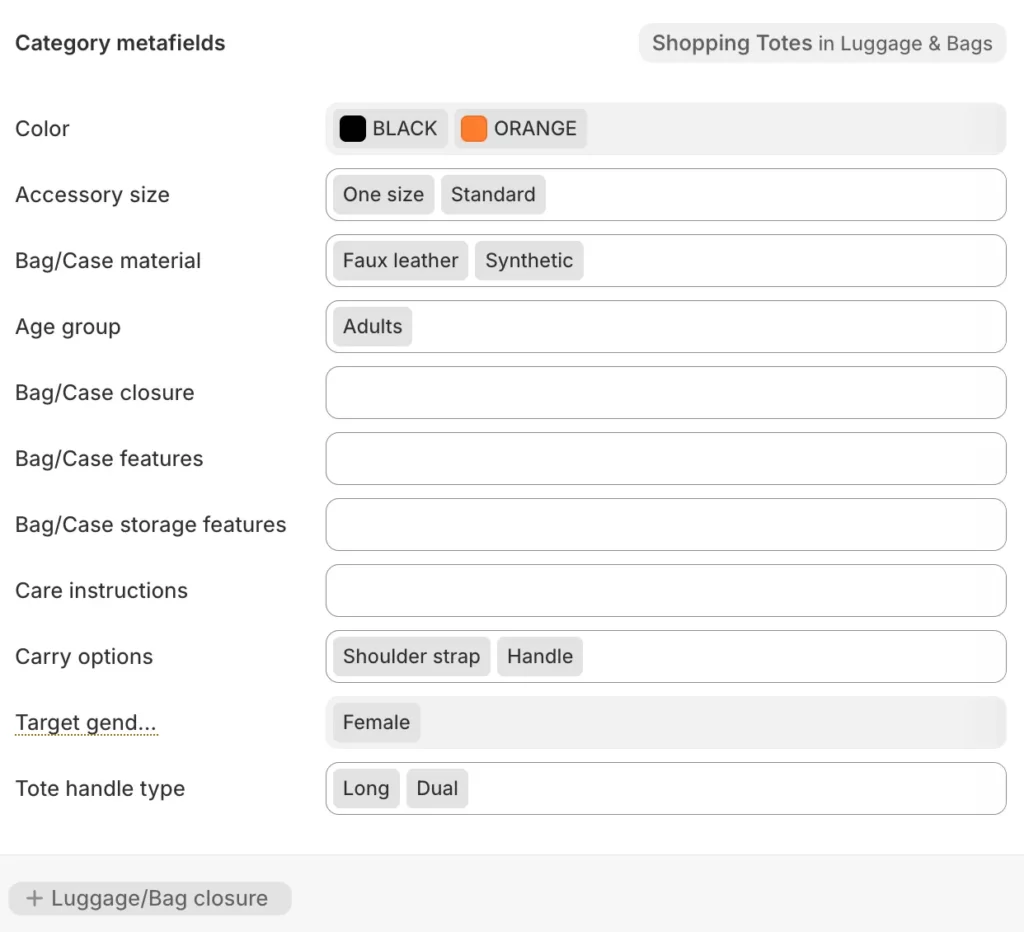
Metafields in Shopify are Product Attributes, like color, material, size, target gender.
When you create or edit a product in the Shopify backoffice, Shopify AI suggests the metafields that Shopify thinks are relevant to your product. It does that also based on the picture, the title and the description you upload. In other words, when you start craeting a product, there might not be any suggested metafields, but after you have added some product information, Shopify will update its suggested Metafields.
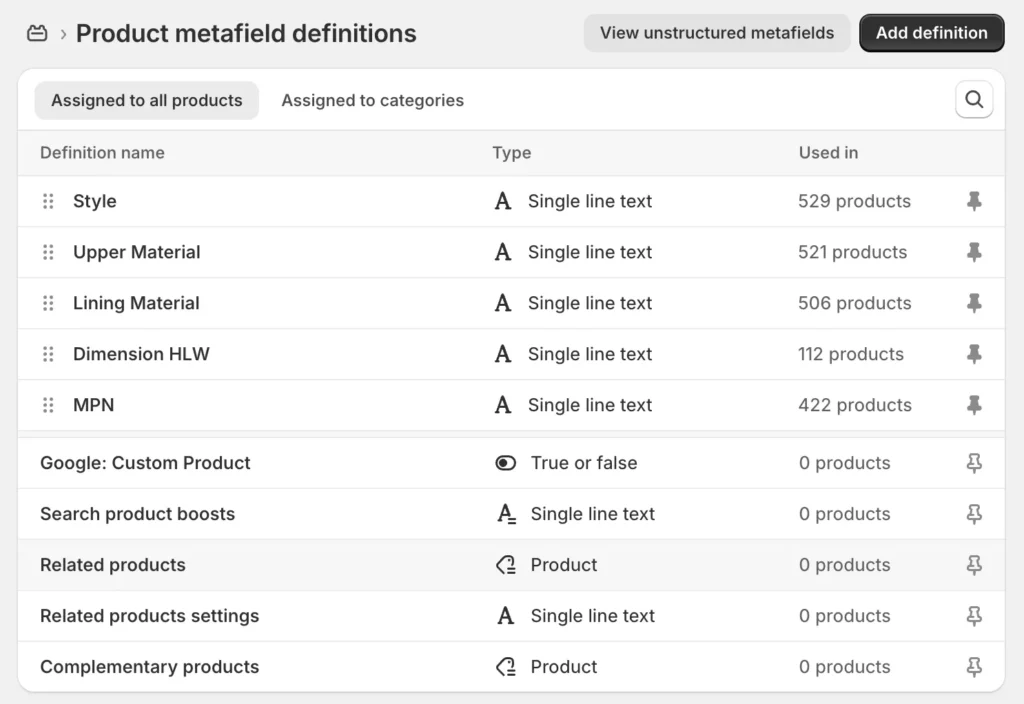
The other important thing to know is that you can create your own metafields. Shopify also calls the metafields Definitions, therefore if you want to create a new metafields you need to click on create new Definition.
The other thing you’ll notice is, there are Product Metafields and Category Metafields, this is another confusing thing, what is means is that Category Metafileds apply to Categories of Products. While Products metafileds potentially appy to all products. In other word a Category Metafield may not be applicable to a product if it’s not in the right Category,
How to use metafields for filters
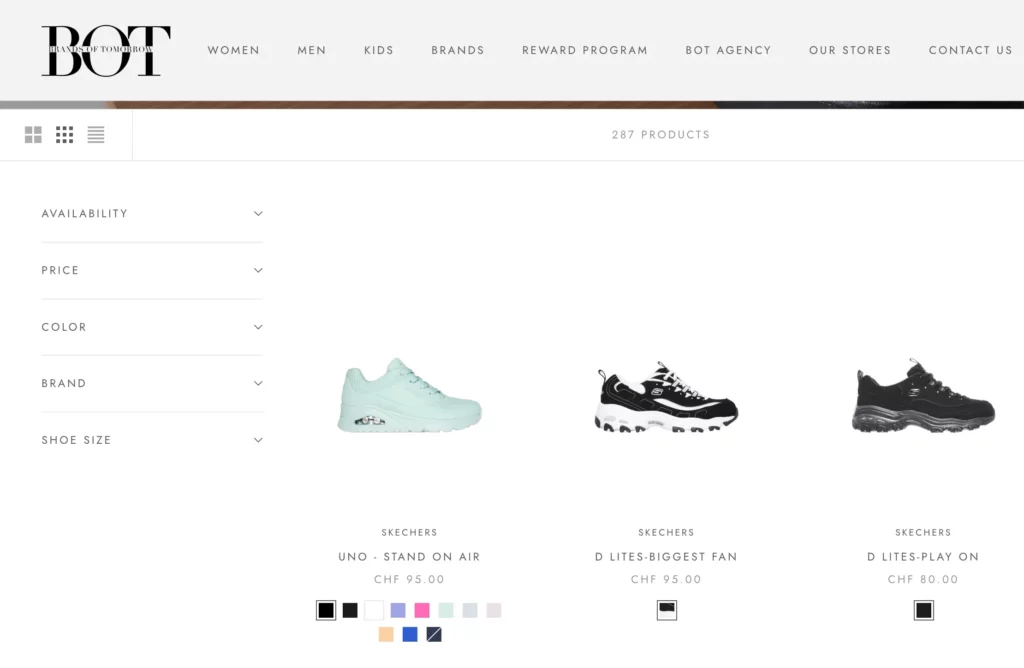
The other very important use of metafields in fashion ecommerce is the creation of personalised filters in the product listing pages. Using the App Search and Discover you can customise the filters on your product listing page.
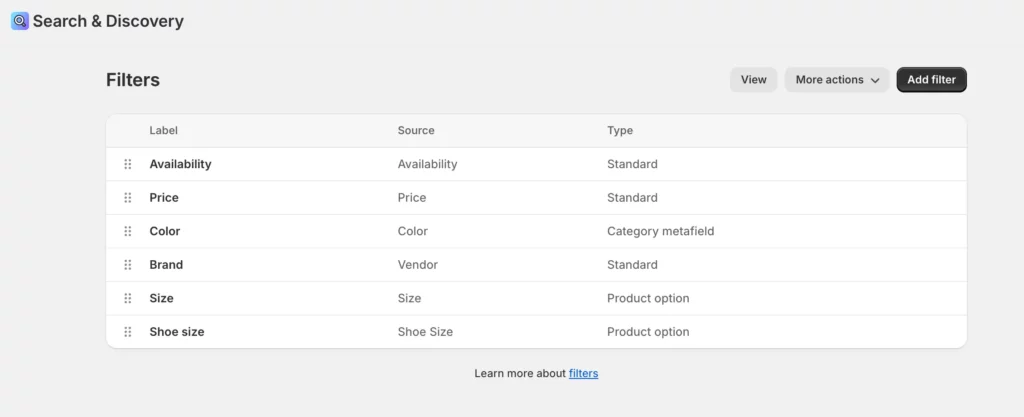
Using the app Search and Discovery you can turn the metafields into filter options that will make the user experience more efficient.
15 Essential Shopify Metafields for Fashion eCommerce
1. Product Material / Fabric Composition
Example: 80% wool, 20% cashmere
Why it’s important:
- mandatory for many markets
- improves product transparency
- useful for filters and product comparison
Type: Multi-line text or list
2. Fit Type
Defines how the garment fits.
Examples:
- Slim fit
- Regular fit
- Relaxed fit
- Oversized
Type: Single line text or dropdown
3. Garment Length
Especially useful for dresses, coats, trousers.
Examples:
- Cropped
- Midi
- Maxi
Type: Single line text
4. Model Size Information
Used by many premium fashion stores.
Example:
Model is 178 cm tall and wears size S.
Improves conversion and reduces returns.
Type: Text
5. Care Instructions
Displayed on product pages.
Example:
- Hand wash
- Dry clean only
- Machine wash 30°
Type: Multi-line text
6. Country of Manufacture
Important for transparency and compliance.
Example:
- Made in Italy
- Made in Portugal
Type: Text
7. Sustainability Attributes
Growing in importance for fashion brands.
Examples:
- Organic cotton
- Recycled materials
- Low-impact dye
Type: List or boolean
8. Season
Useful for merchandising and filtering.
Examples:
- SS25
- FW25
Type: Text
9. Collection / Capsule
Helps create storytelling and merchandising.
Examples:
- Summer Capsule
- Atelier Collection
Type: Text or reference
10. Fabric Weight
Used for premium garments and technical clothing.
Examples:
- Lightweight
- Midweight
- Heavyweight
Type: Text or dropdown
Variant-Level Metafields (Very Important)
These apply to specific sizes or colours.
11. Size Conversion Table
Example:
- EU 40 = US 8 = UK 12
Helps international customers.
Type: Text
12. Variant-specific Fit Notes
Example:
This style runs large, choose one size down.
Type: Text
Merchandising & Storytelling Metafields
These help create premium product pages.
13. Product Highlights
Short bullet points used in product pages.
Examples:
- Italian fabric
- Handmade details
- Limited edition
Type: List
14. Styling Suggestions
Used for cross-selling.
Example:
Pair with the matching blazer and loafers.
Type: Text
15. Lookbook Reference
Links a product to editorial content or campaign.
Examples:
- Spring Campaign
- Resort Collection Lookbook
Often connected to metaobjects.
Type: Reference
Bonus: Metaobjects Fashion Brands Often Use
Many premium Shopify stores also create structured content with metaobjects such as:
- Fabric libraries
- Designers
- Sustainability certifications
- Campaigns
- Lookbooks
These allow rich storytelling and reusable content across products and collections.
💡 Best practice used by many high-end fashion Shopify stores:
Use metafields to create structured product data that supports:
- product filters
- SEO
- AI search
- merchandising
- storytelling
This is one reason Shopify stores today can match the capabilities of enterprise platforms.