
Management essential manual
Theory and Practice
Starting from the a lesson by Enrico Fantaguzzi, this article summarises Fashion Management Best practices and how critical they are for success.
Fashion Management Best Practices: The Blueprint for Sustainable Growth in the Fashion Industry
In an industry as fast-moving and multidimensional as fashion, creativity alone is not enough to ensure success. Behind every trendsetting brand or innovative collection lies a foundation of solid management practices — structures, systems, and leadership models that turn inspiration into consistent performance. Drawing from Digital Fashion Academy lessons by fashion executive and consultant Enrico Fantaguzzi, we unpack what fashion management best practices are, how they work, and why they are critical for business growth.
Building on International Standards
Fashion management best practices are not arbitrary, they are grounded in international standards of organizational design, human resources management, and performance optimization. These frameworks guide how fashion houses, design studios, and retail brands operate every day—ensuring consistency, alignment, and efficiency across every level of the organization.
Understanding “who does what” is fundamental. Whether it’s a start-up atelier or a global conglomerate, having a clear, transparent structure avoids duplication of efforts, miscommunication, and siloed thinking. A well-organized structure helps everyone—from designers and artisans to marketers and logistics teams—understand their purpose and contribution toward shared goals.
Mission, Vision, and Company Goals: The Strategic Foundation
At the core of effective management are three guiding elements: mission, vision, and goals.
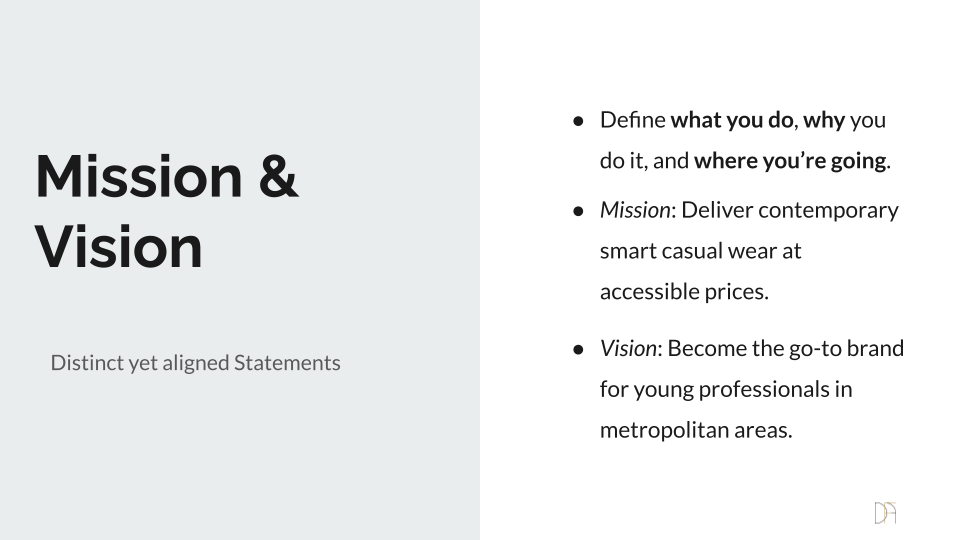
- The mission defines what the company does every day—the tangible purpose that drives operations. For example, a brand might exist “to design contemporary, smart-casual wear at accessible prices.”
- The vision, on the other hand, represents the company’s long-term aspiration—“to become the go-to brand for professionals in metropolitan cities.”
- Company goals operationalize those ideals. Clear, measurable objectives—such as “raise customer satisfaction from 60% to 80% in one year”—help teams translate ambition into action.
Every employee or collaborator, from production assistants to marketing leads, should align their personal goals to the company’s priorities. Enrico Fantaguzzi recalls how even at global corporations like The Walt Disney Company, this alignment process ensured that thousands of employees worked toward the same three overarching annual goals.
Roles, Accountability, and Empowerment
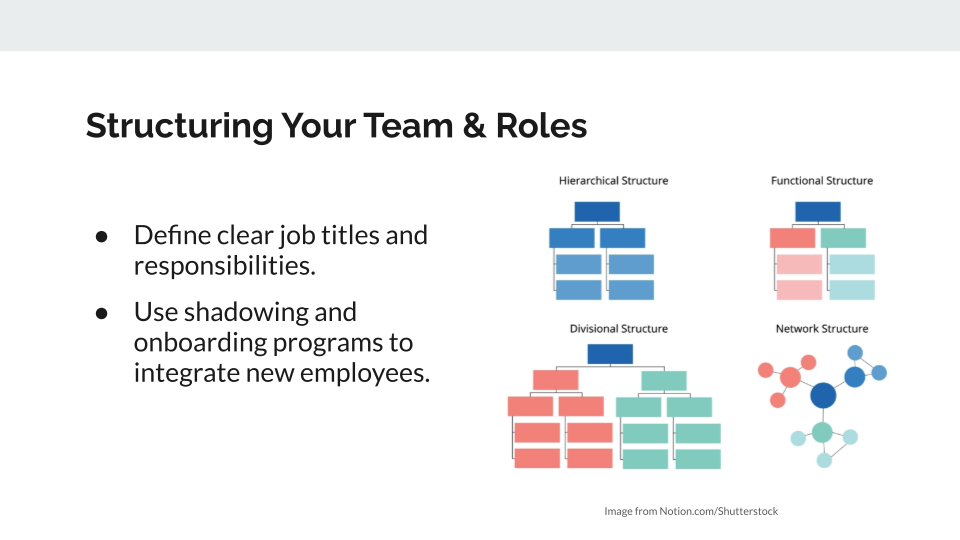
A hallmark of fashion management excellence is clarity in roles and responsibilities. Every function—from design to sourcing, marketing, finance, and operations—must have a clearly defined purpose. Job descriptions, standardized titles, and clear decision-making authority help employees understand not just what they do, but how their work links to the overall brand strategy.
Fantaguzzi emphasizes that accountability should lie with job roles, not individuals. While people may leave, clearly documented roles remain and maintain organizational stability. Empowering employees to make decisions within defined limits fosters independence and prevents managerial bottlenecks—a crucial aspect for creative organizations that rely on speed and innovation.
Hiring, Training, and Onboarding: Shaping the Right Culture
The most successful brands invest strategically in talent acquisition and onboarding.
Recruitment starts with clear criteria: a detailed job description, a review of candidate portfolios, and short practical assignments to verify skills. Combining sources—from universities to freelance platforms—broadens opportunity without compromising quality.
Onboarding is equally essential. A structured induction program that introduces the company’s mission, values, and product story allows new hires to reach productivity faster. Fantaguzzi suggests onboarding materials that include a “brand book” detailing history, mission, vision, and values. Pairing new hires with seasoned staff for “shadowing” accelerates learning while fostering cultural cohesion.
SMART Goals and Delegation
Fashion thrives on originality, but managing teams requires rigor. Setting SMART goals (Specific, Measurable, Achievable, Relevant, Time-bound) translates creativity into accountable, trackable outcomes. Delegation—assigning tasks with clear expectations and periodic check-ins—ensures that responsibility is shared without losing control over outcomes. Effective delegation is a cornerstone of team motivation and productivity.
Meetings and Communication
Communication defines culture. Best-managed fashion houses use structured meetings—one-on-ones, project kick-offs, and cross-functional meetings—to ensure alignment between departments. Each meeting has a purpose: tracking progress, resolving interdepartmental challenges, or reviewing performance. Recording decisions and follow-up actions after each meeting keeps projects transparent and moving forward.
Fantaguzzi underlines the importance of recognizing different communication channels—vertical (manager to team), horizontal (peer-to-peer), formal, and informal—and understanding how each contributes to collaboration and company morale.
Tools for Modern Fashion Management
From collaborative planning boards like Trello, Asana, or Notion to cloud-based storage systems, digital tools have become extensions of effective management. Even simple automation—such as scheduling emails or using AI to generate analytics or product descriptions—can save time and enhance productivity. Importantly, managers should choose tools suitable to their context; in regions with limited connectivity, even WhatsApp groups can serve as effective project trackers.
The RACI Model: Clarifying Responsibility
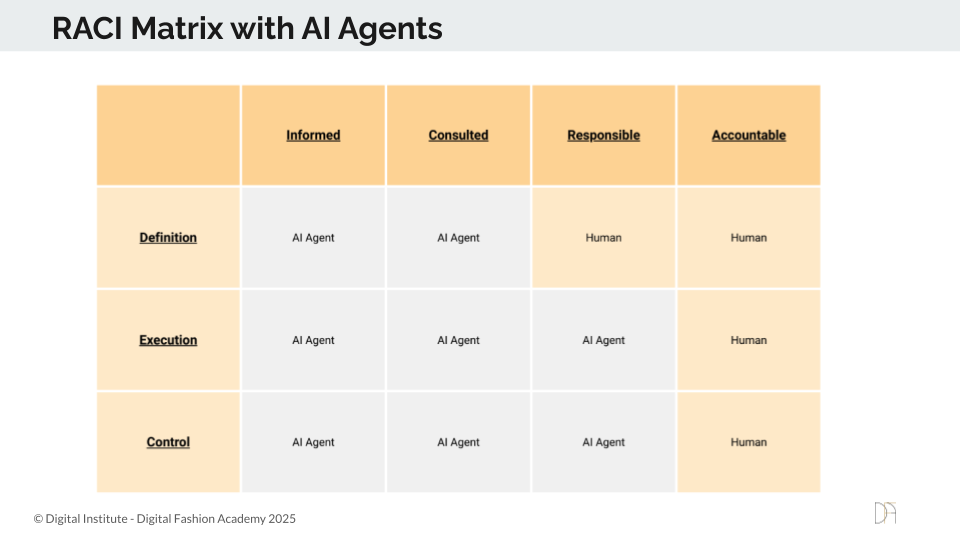
An advanced management best practice is the use of the RACI Model, which distinguishes who is:
- Responsible – executes the task
- Accountable – answers for outcomes
- Consulted – provides input
- Informed – receives updates
In fashion projects, like launching a new collection or building an e-commerce platform, assigning these roles ensures clarity, prevents overlap, and strengthens decision-making.
Continuous Improvement and Quality Management
Quality in fashion goes beyond fabrics and finishes—it includes service, communication, and customer satisfaction. Implementing feedback systems, such as customer surveys or Net Promoter Scores, allows managers to continuously raise standards.
Fantaguzzi refers to the Japanese Kaizen methodology, or continuous improvement: a cycle of planning, executing, and learning. After each project or collection launch, reviewing what worked and what didn’t helps fashion companies refine their methods season after season.
Risk Management and Resilience
Running a fashion business entails managing multiple forms of risk—financial, operational, and reputational. From fire prevention and insurance to managing foreign currency fluctuations and pricing volatility, good managers plan ahead and build safeguards. Risk management is not just about defense; it is about building a resilient organization capable of adapting to change.
Policies, Guidelines, and Procedures: The Backbone of Consistency
Consistency builds trust—with customers and employees alike. This is why leading brands document policies (rules), guidelines (best practices), and procedures (step-by-step instructions). Together, they allow every employee to make decisions aligned with company values and brand image—from travel expenses and customer returns to photography style and packaging standards.
Leading by Example
Finally, leadership is the human side of management. In fashion, where teams are diverse and pressures high, leaders must embody the behavior they want to inspire: organization, empathy, respect, and decisiveness. Fantaguzzi’s advice is simple but powerful: “Ask yourself—am I an example worth following?” Leading by example builds a loyal, motivated team and a thriving company culture.
The Takeaway
Fashion management best practices aren’t merely administrative—they are the foundation of creativity, growth, and sustainability. They provide the scaffolding that allows visionaries to dream, teams to collaborate, and brands to deliver consistently exceptional results.
In the fast-paced world of fashion, where every season brings new challenges, mastering these practices isn’t just an advantage—it’s essential for survival and success.
Management Concepts for Small and Medium Enterprises
Scaling a business from a one-person operation to an efficient organization requires adopting clear management concepts. These are not abstract theories but practical tools that help entrepreneurs save time, delegate effectively, and ensure the company grows sustainably.
Mastering these concepts means being able to apply them daily to improve efficiency, align teams, and reach company goals.
The management concepts in this article are a synthesis of management concepts learned on the job or practical experience from leading international brands.
Applying this knowledge, small companies can grow and be efficient.
1. Company-Wide Goals
- Mission & Vision: Your mission defines what you do and why, your vision defines where you want to go. Both guide decision-making.
- TIP: make sure that Mission and Vision don’t repeat the same thing. The mission has to guide the behaviour of every single employee in the company on a day to day basis. The vision has to guide the people who are involved in strategic decisions to steer the wheel of the company in a specific direction.
- Examples: A mission is Deliver contemporary casual smart clothing for work at accessible prices. A vision is “to be the go-to brand for young professionals living in metropolitan areas”
- Annual Goals: Select three clear and measurable goals for the year (e.g., increase online sales by 20%, launch two new products, expand into one new market). All employees’ work should align with these goals.
- Creating 3 company-wide goals allows all employees to align their goals to these company-wide goals.
- Each employee can be encouraged to write their own goals, which will be reviewed and finalised together with the line manager.
2. Human Resources Organization
Job Descriptions & Job Titles
- Job Description: A clear outline of responsibilities, deliverables, and limits of a role. Example: Digital Marketing Specialist: create advertising campaigns, monitor performance, optimize results, report to the Marketing Manager.
- Job Titles Hierarchy: Intern → Assistant → Specialist → Coordinator → Manager → Senior Manager → Director → Senior Director → VP → SVP → President.
- Titles communicate accountability and decision-making power.
3. Onboarding New Employees
Shadowing
- A practical method where the new hire observes the manager or colleague in daily activities, learning by watching and asking questions.
Induction
- A structured introduction to the company’s identity and tools. Includes:
- History and values of the company
- Product knowledge
- Tools and systems (CRM, ERP, eCommerce, etc.)
- Policies and procedures
- Online or in-person training sessions
4. Performance Management
- Goal Setting: Assign each employee clear, measurable goals aligned with company objectives (ties up with company-wide goals, and hierarchy – 3 goals setting).
- Appraisal: Evaluate performance regularly (quarterly or yearly) to provide feedback, celebrate achievements, and identify areas for improvement. (ties up with one-to-one meeting)
5. Core Management Tools
Delegation
- Learn to assign tasks clearly and trust others to deliver.
- Provide resources, set deadlines, and follow up without micromanaging.
Prioritization
- Not all tasks are equal. Entrepreneurs must learn to focus on what drives results.
- Useful methods:
- Eisenhower Matrix (Urgent vs. Important).
- Pareto Principle (80/20 Rule): 20% of tasks usually generate 80% of results.
- Daily Top 3: Identify the three most important tasks each day.
- Eisenhower Matrix (Urgent vs. Important).
Policies, Guidelines & Procedures
- Policies: High-level rules (e.g., vacation policy, expense reimbursement).
- Guidelines: Best practices (e.g., how to communicate with customers).
- Procedures: Step-by-step instructions for repetitive tasks.
Communication
- Internal communication: There are various clearly defined types of internal communications: horizontal communication (people at the same level of hierarchy), vertical communication (top-down and bottom-up), formal and informal communication. All these types of communication need to be managed.
- Effective interpersonal communication
- Conflict management
- Public speaking
- Effective Emails: Emails are a cold communication means, it allows for only once sense to be involved in the communication: the sight. While interpersonal communication is a warm communication method because it leverages the tone of voice, body language and other factors, the email is cold because it is just text. For this reason, the text in the email needs to be adapted to make it more legible and warm.
- Clear subject line, purpose upfront, short paragraphs, clear action items.
- Use a direct but friendly tone of voice, use bullet points and bold to simplify the reading.
Types of Meetings
- Daily Stand-up (15 minutes max) – Quick updates: What was done yesterday? What’s the focus today? Any blockers?
- Weekly Team Meeting – Review progress toward goals, align priorities, solve issues.
- One-to-One Meetings – Manager with each employee for coaching, feedback, and development (Cross Functional Meeting).
- Project Kick-off Meetings – Define objectives, roles, deadlines before starting a new project.
- Decision-Making Meetings – Short, structured discussions to make a choice (not to endlessly debate).
- Quarterly or Annual Reviews – Check progress against big goals, adjust strategy, celebrate wins.
Keep meetings short, focused, and with clear follow-ups. Time wasted in meetings is a common problem in small organizations. (5 minutes max small talk)
6. Technology for Efficiency
- Cloud & Shared Folders: Organize documents for easy team access (Google Drive, OneDrive, Dropbox).
- Shared Calendars: Coordinate meetings, deadlines, and availability.
- AI Tools: Use AI assistants for drafting emails, analyzing data, generating ideas, and automating repetitive tasks.
- Project Management Tools: Trello, Asana, or Monday.com to track tasks, deadlines, and responsibilities.
7. Leadership & Culture
- Lead by Example: Demonstrate the behavior you want from your team.
- Culture of Accountability: Every team member owns results, not just tasks.
- Continuous Learning: Encourage training, knowledge sharing, and innovation.
👉 The transition from a sole entrepreneur to a growing organization depends on one core skill: the ability to let go of doing everything yourself, and instead build systems, roles, and tools that allow others to deliver results.

Enrico Fantaguzzi is Co-founder and President at Digital Fashion Academy. Digital & ecommerce expert, former digital manager at leading fashion companies such as Gucci, Woolrich, Yoox, 7 For All Mankind, The Walt Disney Company.