

Loris Dedamiani – Founder and CEO of Dualme – The AI platfrom for fashion brands looking to scale visual production without traditional photo shoots. From garment to publishable content in seconds.
Artificial intelligence is transforming the way fashion brands create content, making it faster, more affordable, and more creative than ever before. From generating campaign visuals and social media content to producing virtual product samples, adapting imagery for different markets, and streamlining e-commerce photography, AI is opening new opportunities across the entire fashion value chain.
However, the success of AI-generated content depends on more than just the quality of the images. Fashion is built on authenticity, creativity, and trust, and brands that use AI irresponsibly risk damaging their reputation. The key is to use AI as a tool to enhance creativity and efficiency while remaining transparent with customers whenever content could be mistaken for real photography.
In this guide, we’ll explore the most effective ways to use AI for fashion content creation, the risks brands should be aware of, and the best practices for creating engaging, ethical, and trustworthy AI-powered content.
How can I use AI for creating fashion content?
You can use AI for fashion content creation in several strategic ways, ranging from technical adjustments for ecommerce photos to creative prototyping. However, the most important rule is to maintain transparency with your audience to avoid betraying their trust, which can lead to brand backlash and a loss of reputation.
Here are the primary ways you can utilize AI in the fashion industry:
1. Creative and Advertising Content
- Hyper-realistic Imagery: You can create highly realistic advertising campaigns or blog posts, but these must be clearly labeled as AI-generated if they look like real models or photography.
- Obviously Artificial Scenes: A “clever” way to use AI is to create surreal scenes that are clearly not real, such as a person and a dog walking hand-in-hand while wearing the same dress. This signals to the customer that the content is artificial without needing a specific disclaimer.
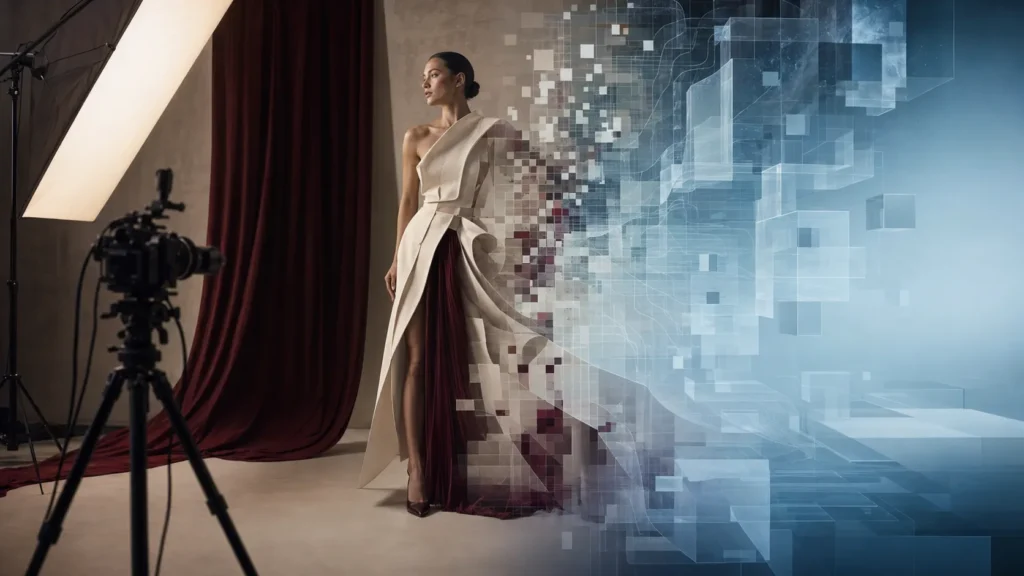
2. Technical E-commerce Enhancements
- Color Swapping: You can use AI for technical shots, such as changing the color of a white t-shirt to other variations. This is considered a standard technical process (similar to Photoshop) and generally does not require a transparency disclaimer.
- Background Swapping: AI can change the setting of a product shot—for example, moving a model from a seaside background to a mountain or countryside setting—to better suit the product’s context, such as jewelry or sportswear.
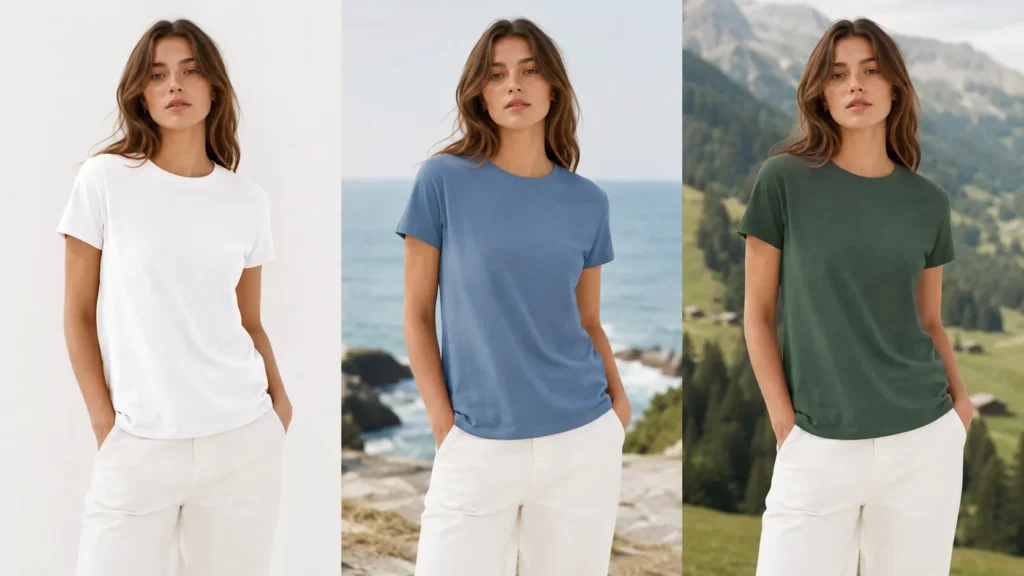
3. Prototyping and Development
- Marketing Mockups: AI can simulate a final advertising result, allowing you to create a mockup before hiring real models and photographers, which saves significant time and money.
- Digital Product Samples: You can develop virtual prototypes of garments to discuss with sales teams and buyers. These digital samples can even be used on social media to gauge consumer interest before the product is manufactured.
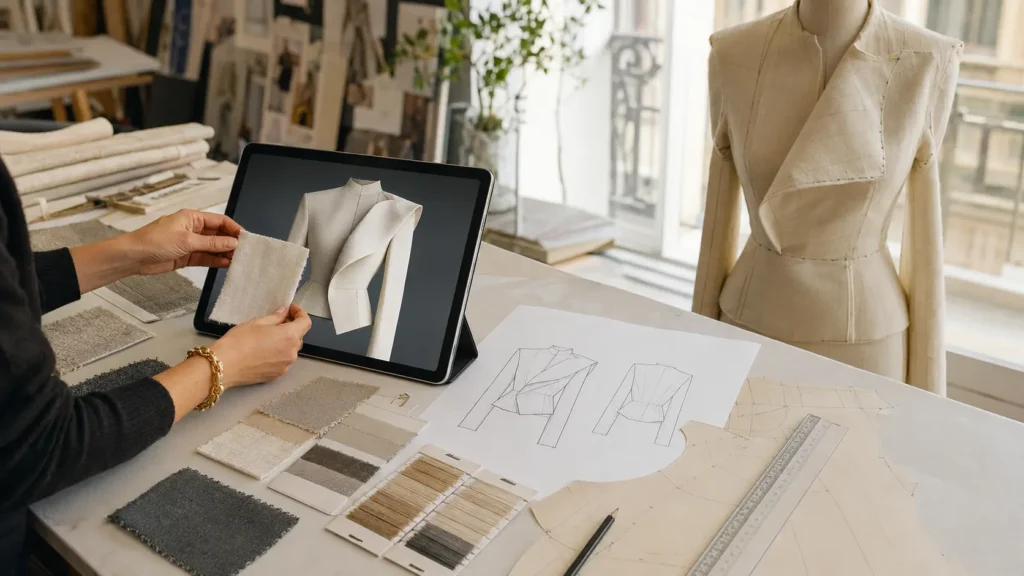
4. Localization and Diversity
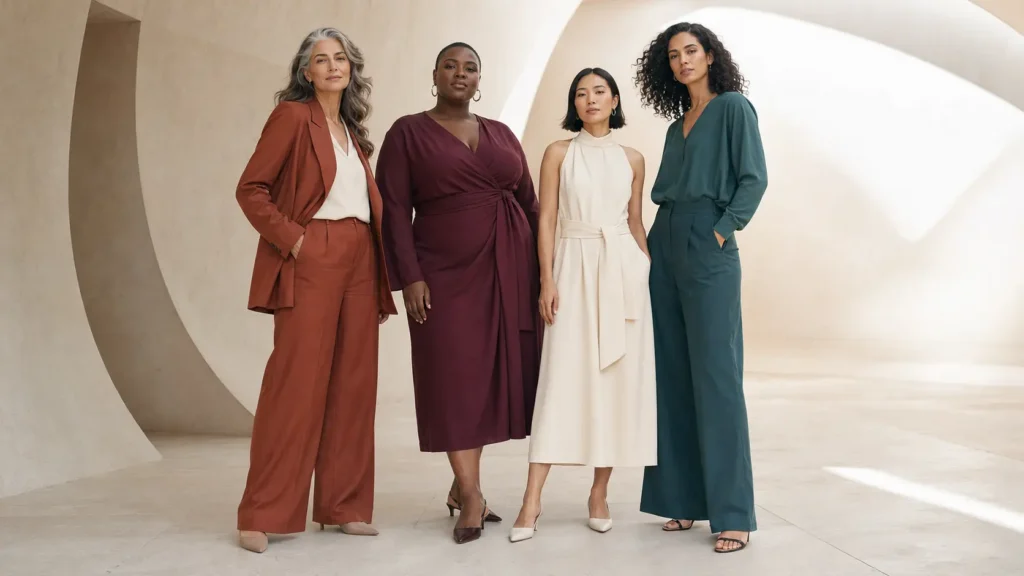
- Targeting Specific Markets: AI allows you to localize imagery to meet the cultural requirements of specific regions, such as the Islamic market, by tweaking clothing or backgrounds.
- Inclusive Representation: You can generate imagery featuring models with different body types, skin tones, or characteristics to better reflect your target audience.
- Virtual Models: You have the option to use digital twins of real models (where the real person is still paid for their likeness) or completely virtual models that the brand owns or licenses.
What you should avoid is pretending that an AI-generated campaign was created with real humans, as this is a common mistake that can damage your brand’s integrity.
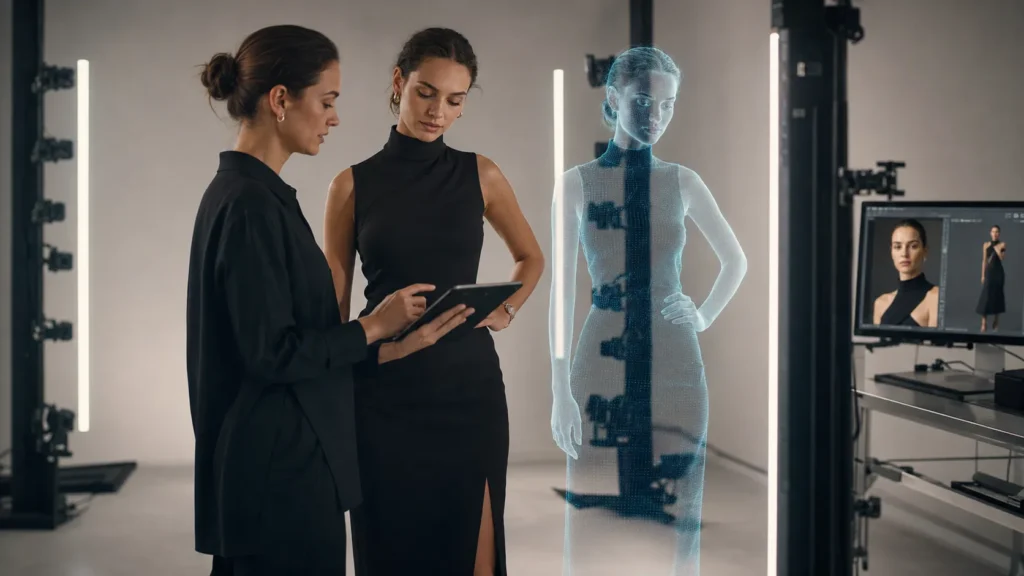
What are the risks of using AI for creating fashion content?
The primary risk of using AI in fashion content creation is betraying the trust of your audience, which can have severe consequences for a brand’s reputation and business.
Specific risks identified in the sources include:
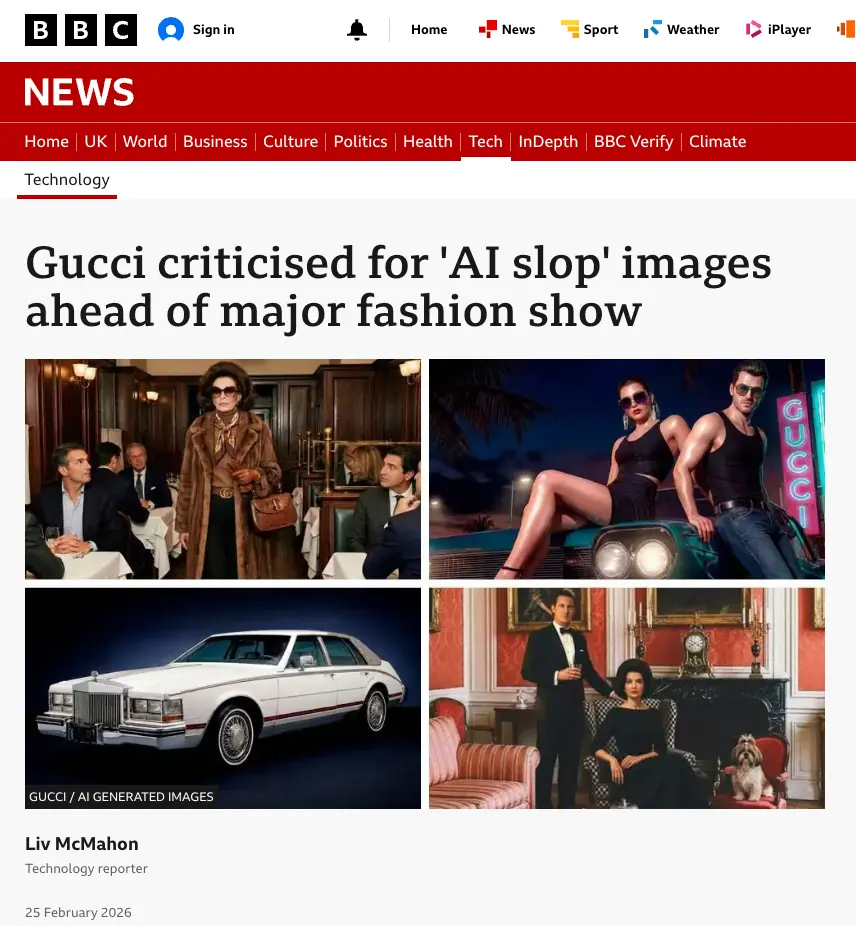
- Loss of Credibility through Deception: If a brand tries to “trick” readers by pretending AI-generated content features real models, photographers, or people, it can lead to significant public backlash. The sources highlight a recent Gucci advertising campaign as an example of how such practices can generate negative reactions.
- Transparency Failures with Realistic Imagery: When AI is used to create content that reproduces reality with high fidelity, failing to clearly label it as AI-generated is considered a major mistake. Customers expect honesty when an image looks like a real-life photograph.
- Ethical Concerns with Virtual Models: While you can use digital twins or entirely virtual models, the risk lies in how these are presented. If you use a digital twin without paying the rights to the real person, or if you use virtual models to bypass diverse human representation without being upfront, it could lead to ethical criticism.
How can I use AI safely for creating fashion content?
Using AI safely in fashion content creation primarily revolves around maintaining transparency to protect your brand’s reputation and customer trust.
To use AI safely, follow these strategies based on the source:
1. Prioritize Transparency
The most critical rule is to ensure your audience knows when content is AI-generated. Attempting to trick readers into believing AI-generated images feature real models or photographers is considered a betrayal of trust that can lead to significant business and reputational backlash, similar to the negative reaction seen in recent high-profile campaigns like Gucci’s.
2. Distinguish Between Realistic and Surreal Content
- Highly Realistic Content: If you create advertising or blog posts that closely mimic reality, you must explicitly label them as AI-generated.
- Obviously Artificial Content: A safer, “clever” way to use AI is to create scenes that are clearly impossible in reality—for example, a person and a dog walking hand-in-hand while wearing the same dress. Because the customer can immediately tell it is artificial, it avoids the risk of deception.
3. Use AI for Technical and Internal Processes
Certain uses of AI are considered “safe” without specific disclaimers because they are viewed as standard technical enhancements, similar to using Photoshop:
- Technical E-commerce Adjustments: You can safely use AI to change product colors (e.g., a white t-shirt to other colors) or swap backgrounds to show products like sportswear or jewelry in different settings like the mountains or seaside.
- Prototyping: Use AI to create mockups for advertising campaigns or digital product samples. This allows you to simulate final results, discuss designs with sales teams, and gauge social media interest before investing in human staff or physical manufacturing.
4. Manage Model Usage Ethically
- Digital Twins: If using a digital twin of a real person, ensure you pay for the rights to their likeness.
- Virtual Models: You can use completely virtual models that your brand owns or has licensed.
- Localization and Diversity: AI can be used safely to tweak imagery for specific markets—such as meeting cultural requirements for Islamic markets—or to represent various body types and skin tones for better inclusivity.
The fundamental mistake to avoid is pretending an AI-generated image was created with humans when it was not.
Would you like me to create a tailored report outlining a “Brand Safety Checklist” for AI content, or perhaps a slide deck focused on the ethical boundaries of AI in fashion?
https://www.bbc.co.uk/news/articles/cjwz6yzn5jqo
What the things not to do when creating fashion content with AI
When creating fashion content with AI, the most critical mistake to avoid is pretending that an image or campaign was created with real humans when it was actually generated by AI.
According to the source, you should avoid the following:
- Lack of Transparency: You must not hide the fact that you are using AI; instead, you should ensure the reader understands the nature of the content.
- Tricking the Audience: Do not attempt to “trick” your readers or customers into believing that the content features real models, photographers, or people.
- Betraying Customer Trust: Deceiving your audience in this way is considered a betrayal of trust, which is damaging to your brand, reputation, and business.
- Ignoring the Risk of Backlash: The source cites a recent Gucci advertising campaign as a cautionary example of the significant public backlash that can occur when AI content is handled poorly.
While certain technical uses—like changing a t-shirt’s color or creating internal prototypes—don’t always require disclosure, any content that realisticly reproduces reality (such as a full advertising campaign or blog post) should be clearly labeled to maintain honesty with your customer,.
Would you like me to create a quiz to test your knowledge on these AI ethical boundaries, or perhaps a tailored report outlining a “Brand Integrity Checklist” for using AI in fashion?
Want to learn more about AI for Fashion?
Take your fashion career into the AI era! Discover the AI for Fashion Executive Master by Digital Fashion Academy, starting October 2nd, 2026.
Learn how AI is transforming fashion, from creativity and trend forecasting to marketing, merchandising, operations and customer experience. Through practical insights, real-world case studies and leading industry professionals.
Discover the programme and join the next edition. All information, is available here. Enrolment open now.
Discover the Executive Master here >>