
Executive Master in AI for Fashion · Module 4, Day 1 · 13 November 2026
Which decisions should AI make, and which ones should a merchandiser, planner or sustainability team own? In Module 4 of Digital Fashion Academy’s Executive Master in AI for Fashion, Giulio Salgaro, Matteo Trombetta and Marco Ruffa tackled that question through three different workflows: supply chain traceability, ecommerce merchandising and inventory planning.
Giulio Salgaro — Build the evidence behind the Digital Product Passport
Giulio warned what happens when supplier documentation is missing.
“The digital product passport starts as an empty box. You need to fill it with content.” — Giulio Salgaro
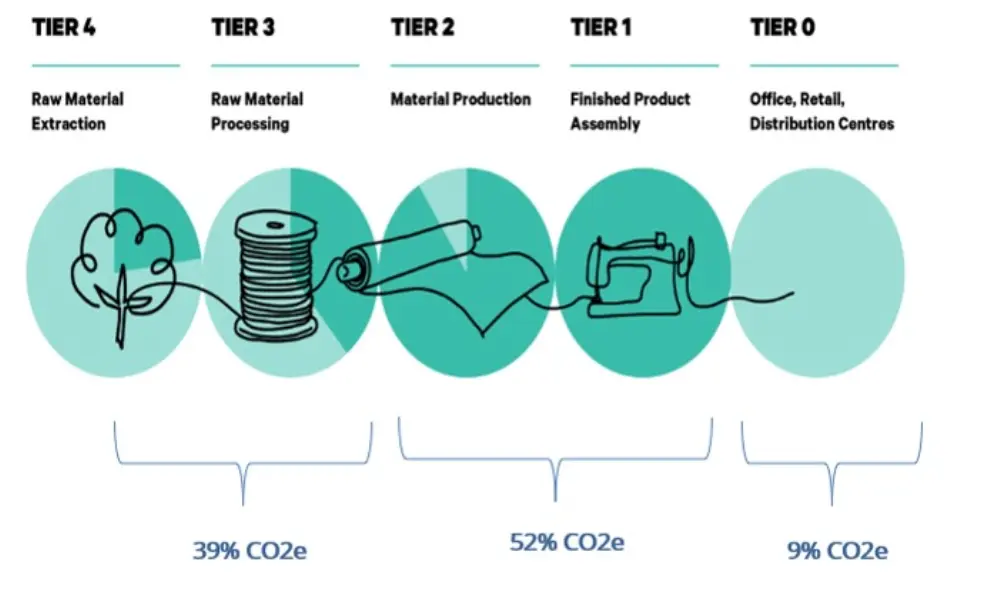
Giulio started with the data behind the passport. A fashion business needs to know what it can document about products and materials, what it can collect from suppliers, and which claims it can substantiate. He used carbon footprint measurement and supply chain mapping to show how that work starts well before a customer scans a QR code.
His examples distinguish available supplier-specific data from estimates. A team can use secondary data where it has gaps and replace it as it collects better primary evidence. Certifications and supporting records also need an owner who can request and maintain them. For a sustainability team, a practical starting point is to pick one product family and map which records it can trace back to each supplier.
“You need also to have a digital tool to collect this information and to ask this information to your supplier.” — Giulio Salgaro
Matteo Trombetta — Give AI a merchandising task you can evaluate
“Can I challenge it, and can I translate it into my processes?” — Matteo Trombetta
Matteo used two questions to assess an AI workflow: can the merchandising team judge the output, and can it incorporate that output into the way it already works? He followed the product from buying through to the ecommerce site, with examples from size breakdowns, product categorisation, outfit recommendations and studio preparation.
Matteo also stressed the need to scrutinise the results.
“One thing which is very important to keep into consideration is about the accuracy, because these models do tend to lie.” — Matteo Trombetta
The studio example makes the test concrete. Before a shoot, the team has to match each runway look to the pieces and accessories the studio needs. Any time saved in preparing that list still has to produce a list the studio can use. The same applies to cross-selling: a team can generate outfit pairings quickly and check whether the combinations make sense for the product, the customer and the brand.
Marco Ruffa — Set the level of automation for each inventory decision
“AI stock and size quantities are proposals, you ned to review them and approve them.” — Marco Ruffa
Marco traced the decisions from financial planning and open-to-buy through forecasting, allocation and replenishment. In his framework, AI can run financial scenarios while planners own the budget. The system can generate a baseline forecast while teams review exceptions. For allocation, it can propose quantities by store and size for planners to edit.
Marco described how forecasting shifts the planner’s attention.
“The system decides on the baseline, so people just adjust on the exception.” — Marco Ruffa
Replenishment can move from approval to automation once the team has tested the rules and trusts how the system behaves within them. Marco demonstrated how teams can backtest against past seasons and track measures such as sell-through and stockouts. That gives planners evidence to decide where recommendations are ready to become routine actions.
Thank you to Giulio Salgaro, Matteo Trombetta and Marco Ruffa for sharing their expertise and examples with our participants.